
Fiction, Uncategorized
Beyond the Profile Picture : The Reality Behind Africa’s Gender-Based Violence
Sep
A profile picture can change in seconds.
A photograph disappears behind a purple background. A black screen replaces a smiling face. A status is posted. A hashtag begins circulating. For a moment, social media becomes filled with messages of solidarity, grief and anger.
But when the profile pictures eventually return to normal, one question remains: What happens to the women and girls who are still living with violence?
Across Southern Africa, gender-based violence (GBV) continues to make headlines, not because the problem is new, but because the cases keep coming. In South Africa, the latest wave of killings has once again pushed gender-based violence and femicide into the national spotlight. In Eswatini, police recorded almost 2,000 GBV cases in just the first three months of 2026. These are not simply numbers. Behind every statistic is a person, a family and a community. South Africa: Nine women, one region and a country asking questions. Perhaps the most disturbing recent development has been the deaths of nine women in and around Ekurhuleni, Gauteng.
According to the South African government’s Inter-Ministerial Committee on Gender-Based Violence and Femicide, the women were discovered between July and September 2026. Their names include Busisiwe Mahlangu, Itumeleng Kekana, Nomfesane Mjobo, Gracious Nkomo, Elizabeth Moselakgomo, Dineo Motapane and Jabulile Ntimba. One victim remained unidentified when the government released its statement.The discoveries occurred over a period of roughly two months, with several bodies found in areas around Kempton Park, Olifantsfontein, Kwa-Thema and Dawn Park.
Police have investigated whether some of the cases may be connected, but authorities have not established that all nine deaths were committed by the same person or group. Investigations remain ongoing. The death of Elizabeth “Tsontso” Moselakgomo, a 38-year-old runner and mother, particularly affected South Africa’s running community. She disappeared on 9 September after going for a run, and her body was subsequently identified. Her death prompted memorial runs and tributes from athletes, including runners in Eswatini. Her story also raises a painful question about something many people take for granted: the freedom to simply go for a run, walk home or travel alone without fearing that you may not return. When the statistics become impossible to ignore. The Ekurhuleni killings are only part of the wider picture.
South African police statistics covering April to June 2026 recorded 569 women murdered and 9,201 reported rapes during the three-month period. The rape figure works out to more than 100 reported cases every day, although reported cases do not represent the entire scale of sexual violence because not every incident is reported to police.
South Africa recorded 50,511 GBV and femicide-related cases during the 2025–26 financial year, according to figures provided to Parliament. Of these, 30,736 resulted in arrests and/or referrals to the National Prosecuting Authority. The figures cover several categories, including murder, attempted murder, rape, sexual assault, abduction and various forms of assault. This is why the debate cannot be reduced to one horrific case.
The issue is much larger.
Eswatini is not outside the conversation
South Africa may currently be receiving international attention because of the Ekurhuleni killings, but Eswatini is experiencing its own GBV crisis.
Between 1 January and 31 March 2026, the Royal Eswatini Police Service recorded 1,994 GBV cases across the country. Police also reported 22 GBV-related deaths during those three months, seven of whom were children. Manzini Region recorded the highest number of reported cases during the period.
The figures were presented during Eswatini’s National Gender-Based Violence Indaba in June, where National Commissioner of Police Vusi Masango described GBV as one of the country’s most pressing challenges. The numbers demonstrate that GBV is not an issue that only exists in major cities or in neighbouring countries.
It exists here.
The alleged killings linked to a pastor
One of the cases that shocked Eswatini in 2026 involved Nkosingiphile Allen Zwane, a pastor who faces allegations relating to the deaths of four women. According to reports, police investigations followed the discovery of a shallow grave containing the bodies of Bongiwe Phetsile Mkhonta, Samkelisiwe Shabangu, Noncedo Mohale and Nolwazi Nonhlanhla Langa. Zwane faces four murder charges as well as charges under Eswatini’s Sexual Offences and Domestic Violence Act. The allegations have not yet been determined by a court, and he remains entitled to the presumption of innocence.
The case has nevertheless had a profound effect on the country, with the Eswatini Association of Funeral Practitioners announcing that it would assist with the funerals of three of the women. The organisation described the gesture as both humanitarian assistance and a stand against GBV.
Another case: a relationship that ended in violence
In September, Eswatini Observer reported the killing of 42-year-old Njabulo Khumalo in Hlatikulu.
According to police information reported by the publication, Khumalo was allegedly attacked and fatally stabbed by her former lover, 37-year-old Steve Phumlani Mtsetfwa. Police later encountered Mtsetfwa while attempting to apprehend him, and he died after allegedly resisting arrest. The two had reportedly previously been in a relationship and had a six-year-old daughter.
The case illustrates one of the difficult realities of GBV: violence does not necessarily begin with a stranger. Sometimes the person causing the harm is someone the victim knows — a partner, former partner, relative, friend or another person within their circle.
That is also reflected in research cited by Eswatini Observer. A UNFPA study identified 145 intimate-partner femicides in Eswatini between 2009 and 2022, with married women identified as facing a particularly high risk within the study’s findings.
A fourth case that returned to the headlines
On 23 September 2026, the High Court of Eswatini found former deputy sheriff Vusi Charles Mncina guilty of murdering four women and attempting to murder a fifth woman. The killings occurred in Goje Township, Ezulwini, in October 2023. The deceased were Lungile Shongwe, Fikile Shongwe, Cynthia Khulile Shongwe and Nonhlanhla Thwala. A fifth woman, Thuli Mkhwanazi, survived the shooting.
Although the incident itself occurred in 2023, the verdict this week has brought the case back into public discussion at precisely the time when Southern Africa is again confronting questions about violence against women.
It is another reminder that cases do not end when the headlines disappear.
There are investigations.
There are court appearances.
There are families waiting for justice.
And there are survivors who continue living with what happened.
The social-media question
This brings us back to the profile picture.
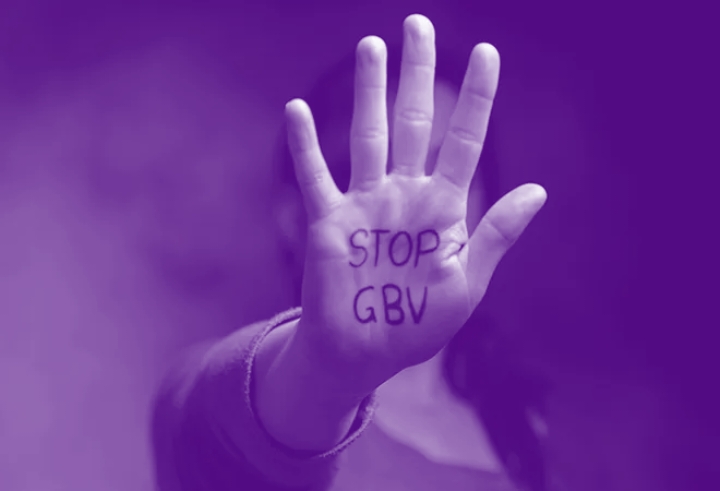
In 2025, the Women for Change campaign in South Africa encouraged people to change their social-media profile pictures to purple as a public expression of solidarity against GBV and femicide. The campaign became highly visible online, with people across South Africa and beyond participating.
The symbolism matters.
A profile picture can tell someone who has survived violence that they are not alone. It can start a conversation. It can make someone who has never thought seriously about GBV stop and ask questions.
But a profile picture cannot investigate a murder. It cannot prosecute an alleged perpetrator. It cannot provide a survivor with counselling. It cannot create a safe home. And it cannot bring a murdered woman back to her family.
That does not mean changing a profile picture is meaningless. It means it should be the beginning of solidarity, not the end of it.
What happens after the trend?
The real challenge begins when the hashtags stop trending. It begins when friends take reports of abuse seriously. When families stop telling victims to remain silent for the sake of preserving a relationship. When communities refuse to protect perpetrators because they are respected, wealthy, religious or powerful. When boys and men are taught that masculinity does not require control, intimidation or violence. When survivors can report abuse without being blamed for what happened to them. And when institutions respond quickly enough that victims do not have to repeatedly prove that they deserve protection.
In Eswatini, the government has also been working towards operationalising the National Register for Sex Offenders, provided for under the Sexual Offences and Domestic Violence Act. The government announced in July that it was moving towards recruiting a registrar to administer the register.
Such measures matter, but laws and systems only become meaningful when they are implemented effectively and survivors can actually access them.
Beyond South Africa and Eswatini
Gender-based violence is not a South African problem. It is not an Eswatini problem. And it is not something that belongs to one gender, one family or one community. It is a problem that affects societies across Africa and around the world. But Southern Africans have a particular responsibility to confront what is happening in our own communities.
We know the names.
We know the places.
We see the families mourning.
We see the court cases.
We see the social-media posts.
And increasingly, we see people changing their profile pictures again. So perhaps this time the question should not be:
“What colour is your profile picture?”
